Advancing the Conversation on Addiction Treatment
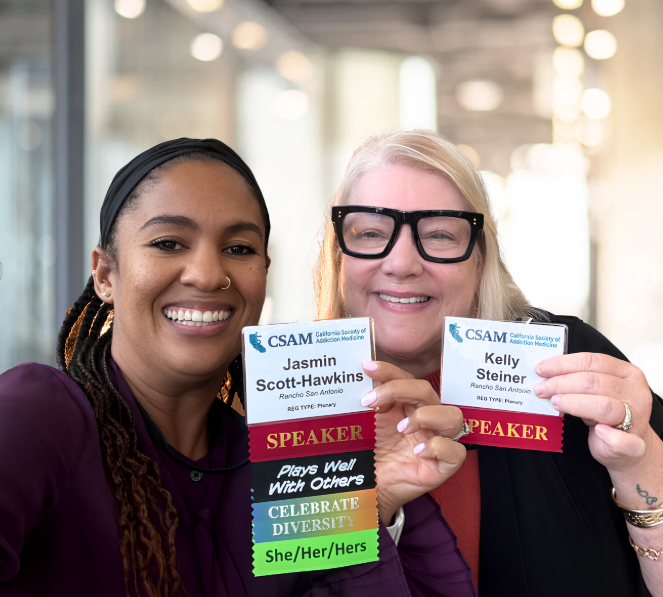 Expanding access to substance use treatment, overcoming barriers to care, and helping young people build healthier futures were among the important topics explored at the recent California Society of Addiction Medicine (CSAM) conference.
Rancho San Antonio was pleased to be part of that conversation, with Substance Use Disorder (SUD) Director Kelly Steiner and SUD Medical Director Dr. Scott Hawkins presenting a workshop alongside other leaders in the field of addiction medicine.
At the invitation of Amy McIlvaine, Director of the California Institute for Behavioral Health Solutions (CIBHS), Kelly and Dr. Hawkins participated in “From MAT Access Barriers to Integrated, Sustainable Solutions: Clinical, Operational, and Lived Experience.” The workshop explored the challenges of providing Medication-Assisted Treatment (MAT) and the clinical and operational approaches that can help make treatment more accessible and sustainable.
The well-received presentation brought together perspectives from Rancho, Cri-Help, and the Los Angeles County Department of Public Health’s Substance Abuse Prevention and Control (SAPC), including Medical Director Dr. Hurley. It was an opportunity to share experiences, discuss solutions, and learn from organizations working to improve substance use treatment throughout California.
For Rancho, the invitation was especially meaningful as our SUD outpatient program continues to grow and evolve. Our team works to make treatment accessible to teens and young adults through compassionate, individualized care that incorporates harm reduction, Medication-Assisted Treatment, and an understanding that every person’s path to recovery is different.
An incredibly impactful contribution to the workshop came from one of Rancho’s clients.
At just 20 years old, he shared his personal journey with substance use and recovery, giving conference attendees an opportunity to hear directly from someone whose life has been shaped by the very services and approaches being discussed.
His progress has been remarkable. With treatment, encouragement, and a great deal of personal determination, he has secured employment, purchased his own car, and returned to school. He is now working toward his high school diploma and has plans to attend college.
His story brought a deeply personal perspective to the workshop and served as a reminder of why conversations about access to treatment are so important. Behind the clinical practices, policies, and programs are young people working hard to make positive changes in their lives.
We are proud of Kelly, Dr. Hawkins, and our SUD team for the opportunity to share Rancho’s experience with colleagues across the state. The conference was an opportunity to contribute to an important conversation, celebrate the progress being made in addiction treatment, and recognize the work still ahead to ensure that more young people have access to the care they need.
 @facebook.com/RSAorg
 @RanchoSanAntonio
 @ranchosanantonio_org
 @rancho-san-antonio